Suggested article
Toghyani: Some singers cover up their weaknesses with vocal ornamentations (Tahrir)
Absolutely! Here’s your text with all instances of "Toghiyani" changed to **Toghyani**, and the rest as before, in clean, native English for professional/educational use:
---
### Elyas Toghyani: Biography, Views, and Artistic Concerns
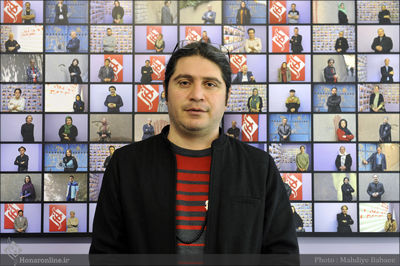
**Elyas Toghyani** is a singer, musician, and university lecturer born in Isfahan. He learned the basics of singing from his father, Ebrahim Toghyani. Later, he studied under masters such as Malek Mohammad Masoudi (introduction to vocal radif) and the late Nahid Daei-Javad (advanced studies in the Isfahan vocal school).
Besides his specialization in the ney (Persian reed flute), Toghyani is also familiar with other traditional instruments like tar, setar, and tonbak. He graduated from the Tehran University of Music and has collaborated with various ensembles, including "Delshodegan," "Tolou," "Parand," "Chakavak," "Afaq," "Nasim Saba," "Sepehr," "Roonak," and "Navaye Mokhalef." He has also performed in Denmark and Sweden with the "Shams Molana" group for Rumi's 800th anniversary, as well as in the UAE.
Toghyani is a faculty member at the University of Culture and Art, teaching voice, singing, improvisation, vocal response, and ney performance.
---
#### Interview
**Q: Mr. Toghyani, when did you start music, and under whose guidance?**
A: I started with poetry and music from childhood, under my father's guidance. Later, I chose the ney as my main instrument in the Isfahan School of Music and studied both instrument and voice with masters like Khalil Maleki and Malek Masoudi, among others. My greatest influence, however, came from studying with Nahid Daei-Javad, and in 1995 I had the privilege of training with the unique master of Iranian music, Hassan Kassai. I also learned from other greats such as Mohammadali Kiani-Nejad, the late Mohammadali Hadadian, Jamshid Andelib, and Hassan Nahid. I completed my theory courses with Dr. Sasan Fatemi, Houman Asadi, and Siavash Beizaei.
**Q: Which singing masters influenced you the most?**
A: As a child, I listened to masters like Delkash, Parissa, and Mohammad Reza Shajarian, but my main influences are from the Isfahan school—Nahid Daei-Javad, Taj, Iraj, and Alireza Eftekhari.
**Q: As an artist, what is your main concern regarding music and its development?**
A: Two things have always been important to me:
1. Spreading and teaching this pure art correctly, and giving real artists their proper social standing.
Teachers must enter this field with expertise and the right intentions—not just to gain a title or status. Patience and experience are crucial here.
**Q: And the second point?**
A: Sometimes artists’ status is either lower or higher than it should be, which is troubling. An artist’s hypocrisy is often evident in their work. I wish art wasn’t tainted by personal gain. The highest value in human existence is the exchange of feelings. If we play with or ignore our feelings and art, we lose everything. My father once wrote: “Some have sold art for money; others have devoted their lives to art.” I have always tried to be correct in my work, never cut corners in teaching, and not withhold any technique.
**Q: What is the current state of music education, especially singing?**
A: The state of music education is good, but it must be done consciously. It’s better to teach with the student's own voice, not by having every student simply imitate their teacher’s voice. The main goal should always be correct singing and quality, not quantity—other aspects come later.
**Q: Can you elaborate?**
A: If someone doesn’t know the basics and principles of singing, how can they meaningfully experience it? Teaching singing should start by identifying the student’s vocal range and position, then teaching the radif. We shouldn't mislead those interested in singing.
Some issues students report from previous teachers:
- A teacher sings in only one register for all students, regardless of age.
- All melodic sections are taught from the same note, so students don’t learn to recognize key changes within a dastgah.
- Students are told that singing must only be practiced with Iranian instruments, or only with tahrir (ornamented runs).
- They hear “Sing as high as possible” or “Your voice should match the album,” or “You must only start with Dastgah-e Shur, starting with Mahur is a huge mistake,” and so on.
Unfortunately, some radif singers cover up their weaknesses with excessive tahrir, hiding flaws behind ornamentation. Singing should first be learned plainly, without tahrir, and only then adorned. If a room is ugly, no amount of decorations can hide it; first, the foundations must be right, and then you decorate. Simplicity is beautiful. It’s better to sing a few right notes than many wrong or unmusical ones. It’s also better to sing one phrase well than the whole radif poorly or inharmoniously.
**Q: Are there any albums you plan to release?**
A: I have two albums ready for release.
- The first, "Owj Roya" (Peak of the Dream), composed and arranged by my talented friend Masoud Tadayoni, with lyrics mostly by Navid Esmaeilzadeh, will soon be published by Nokhosrovani Barbod with official approval from the Ministry of Culture.
- The second album, almost finished, is composed and arranged by the promising artist Ali-Asghar Arabshahi and will soon be released.
---
Let me know if you want any further changes, or want pieces trimmed/reshaped for your specific purpose (like CMS display, cards, or sections)!
---
### Elyas Toghyani: Biography, Views, and Artistic Concerns
**Elyas Toghyani** is a singer, musician, and university lecturer born in Isfahan. He learned the basics of singing from his father, Ebrahim Toghyani. Later, he studied under masters such as Malek Mohammad Masoudi (introduction to vocal radif) and the late Nahid Daei-Javad (advanced studies in the Isfahan vocal school).
Besides his specialization in the ney (Persian reed flute), Toghyani is also familiar with other traditional instruments like tar, setar, and tonbak. He graduated from the Tehran University of Music and has collaborated with various ensembles, including "Delshodegan," "Tolou," "Parand," "Chakavak," "Afaq," "Nasim Saba," "Sepehr," "Roonak," and "Navaye Mokhalef." He has also performed in Denmark and Sweden with the "Shams Molana" group for Rumi's 800th anniversary, as well as in the UAE.
Toghyani is a faculty member at the University of Culture and Art, teaching voice, singing, improvisation, vocal response, and ney performance.
---
#### Interview
**Q: Mr. Toghyani, when did you start music, and under whose guidance?**
A: I started with poetry and music from childhood, under my father's guidance. Later, I chose the ney as my main instrument in the Isfahan School of Music and studied both instrument and voice with masters like Khalil Maleki and Malek Masoudi, among others. My greatest influence, however, came from studying with Nahid Daei-Javad, and in 1995 I had the privilege of training with the unique master of Iranian music, Hassan Kassai. I also learned from other greats such as Mohammadali Kiani-Nejad, the late Mohammadali Hadadian, Jamshid Andelib, and Hassan Nahid. I completed my theory courses with Dr. Sasan Fatemi, Houman Asadi, and Siavash Beizaei.
**Q: Which singing masters influenced you the most?**
A: As a child, I listened to masters like Delkash, Parissa, and Mohammad Reza Shajarian, but my main influences are from the Isfahan school—Nahid Daei-Javad, Taj, Iraj, and Alireza Eftekhari.
**Q: As an artist, what is your main concern regarding music and its development?**
A: Two things have always been important to me:
1. Spreading and teaching this pure art correctly, and giving real artists their proper social standing.
Teachers must enter this field with expertise and the right intentions—not just to gain a title or status. Patience and experience are crucial here.
**Q: And the second point?**
A: Sometimes artists’ status is either lower or higher than it should be, which is troubling. An artist’s hypocrisy is often evident in their work. I wish art wasn’t tainted by personal gain. The highest value in human existence is the exchange of feelings. If we play with or ignore our feelings and art, we lose everything. My father once wrote: “Some have sold art for money; others have devoted their lives to art.” I have always tried to be correct in my work, never cut corners in teaching, and not withhold any technique.
**Q: What is the current state of music education, especially singing?**
A: The state of music education is good, but it must be done consciously. It’s better to teach with the student's own voice, not by having every student simply imitate their teacher’s voice. The main goal should always be correct singing and quality, not quantity—other aspects come later.
**Q: Can you elaborate?**
A: If someone doesn’t know the basics and principles of singing, how can they meaningfully experience it? Teaching singing should start by identifying the student’s vocal range and position, then teaching the radif. We shouldn't mislead those interested in singing.
Some issues students report from previous teachers:
- A teacher sings in only one register for all students, regardless of age.
- All melodic sections are taught from the same note, so students don’t learn to recognize key changes within a dastgah.
- Students are told that singing must only be practiced with Iranian instruments, or only with tahrir (ornamented runs).
- They hear “Sing as high as possible” or “Your voice should match the album,” or “You must only start with Dastgah-e Shur, starting with Mahur is a huge mistake,” and so on.
Unfortunately, some radif singers cover up their weaknesses with excessive tahrir, hiding flaws behind ornamentation. Singing should first be learned plainly, without tahrir, and only then adorned. If a room is ugly, no amount of decorations can hide it; first, the foundations must be right, and then you decorate. Simplicity is beautiful. It’s better to sing a few right notes than many wrong or unmusical ones. It’s also better to sing one phrase well than the whole radif poorly or inharmoniously.
**Q: Are there any albums you plan to release?**
A: I have two albums ready for release.
- The first, "Owj Roya" (Peak of the Dream), composed and arranged by my talented friend Masoud Tadayoni, with lyrics mostly by Navid Esmaeilzadeh, will soon be published by Nokhosrovani Barbod with official approval from the Ministry of Culture.
- The second album, almost finished, is composed and arranged by the promising artist Ali-Asghar Arabshahi and will soon be released.
---
Let me know if you want any further changes, or want pieces trimmed/reshaped for your specific purpose (like CMS display, cards, or sections)!
Category:
Article
Date:
2025/05/30